
Anúncios
Can meeting someone while helping a local cause lead to deeper bonds than a swipe? This idea challenges the usual path to romance and asks whether shared service can spark real connection.
Anúncios
The model blends meeting new people with real-world impact. Platforms like The Singles Project and Swoovy link membership to donations or events at nonprofits. That setup nudges people toward shared tasks that reveal values fast.
Rather than small talk, first meetings often focus on teamwork and purpose. That creates a natural test of compatibility and can foster empathy, collaboration, and healthier early dynamics.
Anúncios
With over 30% of U.S. adults trying online services, this platform evolution shows how love and civic participation can grow together. The rest of the article will explain what drives adoption, how the model works, notable examples, and where this change may lead.
Why Volunteer-Based Dating Apps Are Trending Today
Many singles now look for meetings that combine connection with meaningful action. Fatigue with endless profiles and shallow conversation has made people more selective.
The shift from online dating fatigue to purpose-driven connection
Users want formats that do more than surface photos. First meetups that involve shared tasks surface values and compatibility faster than small talk. That reduces wasted time and gives each encounter a tangible community benefit.
Present-day context: a growing market and the search for shared values
Research shows over 30% of U.S. adults have tried online dating, creating room for niche services. Platforms like The Singles Project and Swoovy appeal because they turn first dates into volunteer shifts or nonprofit events.
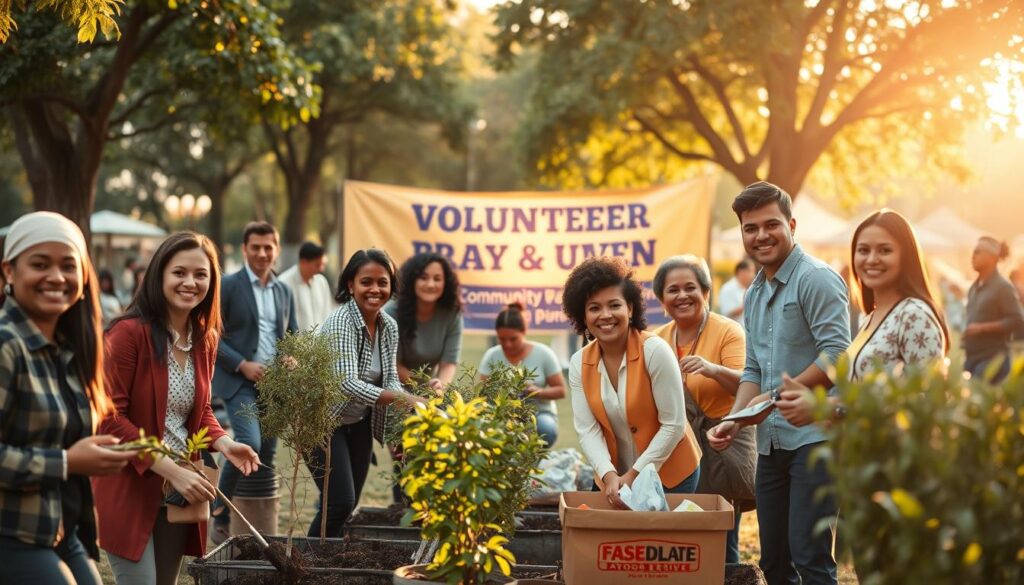
This trend reflects a cultural change: people increasingly value cause-driven experiences. Aligning civic-minded interests early can improve dating outcomes and help build trust, making love and service a natural pairing for many today.
Volunteer-Based Dating Apps: How They Work and Why They Cut Through the Noise
Platforms that pair service with social discovery turn a first meeting into shared purpose.
Matching on shared interests, values, and nonprofit events
Users build a profile, list interests, and select causes they care about. The system matches people on values and volunteering preferences. This cuts down on shallow browsing and raises the chance of a real connection.
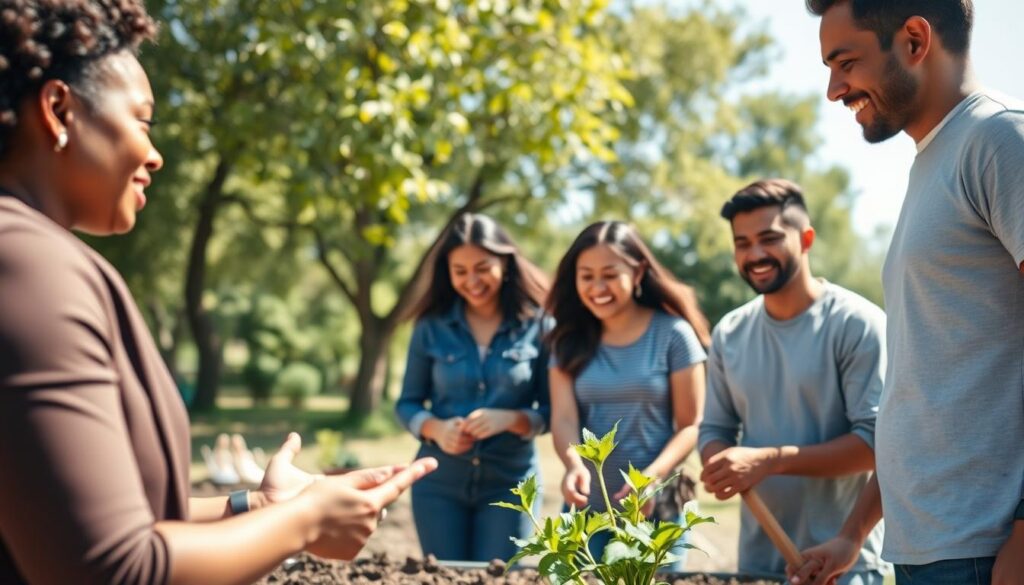
First dates with impact: from local nonprofits to community engagement
Matched pairs choose specific nonprofit events that double as a first meet-up. Working side-by-side creates natural conversation and shows character in action.
“Activity-based meetings reveal alignment in a low-pressure, collaborative environment.”
Solving common barriers to volunteering: time, information, and going with someone
Top reasons people don’t volunteer are lack of time, missing information, and wanting a companion. The platform organizes opportunities, lists event details, and pairs participants to remove these obstacles.
Integrated calendars, clear event pages, and in-app messaging make it easy to sign up and get involved without friction.
| Step | User action | Benefit | Example |
|---|---|---|---|
| Create profile | Indicate interests and causes | Matches reflect values | Swoovy profile setup |
| Match | Find people with similar interests | Less superficial contact | Shared volunteering filters |
| Choose event | Select local nonprofit shift | Built-in first meeting plan | Nonprofit-hosted events |
| Follow up | Repeat opportunities or stay involved | Potential sustained engagement | The Singles Project volunteering tools |
In short, the app and platform act as connectors between people and nonprofits. Even if romance doesn’t follow, communities benefit and individuals find clear ways to contribute.
Data and Research: From Online Dating to Community Impact
Research now ties patterns in online meeting behavior to clear civic outcomes and volunteer hours.
Over 30% of U.S. adults use online dating—here’s what’s changing
More than 30% of adults in the U.S. have tried online dating, creating an audience for purpose-driven options.
Platforms that combine social matching with nonprofit events meet a demand for more meaningful first meetings.
90% want to volunteer, but only 1 in 4 do: turning intent into action
Stanford Center on Longevity data shows 90% of adults want to volunteer, yet only about one in four follow through.
Common barriers are limited time, lack of clear information, and hesitation to go alone. These stop willing people from giving hours.
Volunteer time is valued at roughly $27.20 per hour, so converting intent to action yields tangible support for nonprofits.
- Streamlined event pages and paired sign-ups reduce activation energy.
- Targeted design tackles the specific barriers identified by research.
- When people face fewer hurdles, recurring participation and deeper nonprofit ties increase.
Data-backed design can turn aspiration into measurable community support.
Inside the Platforms: Swoovy and The Singles Project
Two platforms have taken different routes to turn service into a practical way to meet new people.
Swoovy’s approach
Swoovy’s dating app matches people by shared cause areas. Users pick events and opportunities, then meet at a local nonprofit for a structured first encounter.
The model has supported over 100 nonprofits and grew to about 4,000 users in Austin. That traction shows demand for activity-based first meetings.
During COVID, Swoovy added remote options and built tools for employees, couples, groups, and friends to increase engagement.
Expanding beyond singles
The company now offers a broader platform for teams and corporate programs. Firms can organize service work that aligns with employee values.
The Singles Project
The Singles Project links donation access to app features and adds volunteering tools. It aims to build fundraising and collective participation.
The organization is structured as a worker cooperative in Sweden and a public benefit corporation in New York, reflecting a mission-first company strategy.
| Platform | Core model | Reach | Organizational form |
|---|---|---|---|
| Swoovy | Match via nonprofit events and opportunities | Supported 100+ nonprofits; grew in Austin | For-profit platform with corporate features |
| The Singles Project | Donation-linked access plus volunteering | Movement building and fundraising focus | Worker cooperative (Sweden); PBC (NY) |
Both teams focus on removing barriers so users can find events, attend easily, and channel sustained support to nonprofits. Their strategy seeks a stronger connection between community impact and social discovery.
Volunteer-Based Dating Apps and the Future of Community, Democracy, and Relationships
Connecting over local work can turn a single meetup into regular community engagement. When people meet while helping a cause, the interaction often becomes a habit rather than a one-off event.
From shared interests to sustained participation: building collective power
Matching on shared interests nudges people to return. A single shift at a local nonprofit can lead to repeated involvement.
That repeat participation strengthens community ties and expands civic capacity. The Singles Project frames this as a loop: action mobilizes more people, which grows collective power and democratic participation.
Reducing superficiality in dating while strengthening local nonprofits
Shifting early interactions to collaboration and purpose reduces small-talk and shows character in action.
Groups and friends can join, making service a social way to connect. That normalization helps people get involved and keeps nonprofits supplied with steady volunteers.
| Benefit | How it works | Outcome |
|---|---|---|
| Sustained volunteers | Match on shared causes, repeat events | Stronger nonprofits and stable support |
| Healthier relationships | Focus on teamwork and empathy | Deeper relationships and trust |
| Civic growth | Networks of people acting together | Greater community capacity and democratic habits |
Conclusion
Purpose-driven meetups turn ordinary introductions into meaningful moments that matter to people and places.
Examples like Swoovy and The Singles Project show how dating apps and platforms can make it easy to spend time on events that help others. These services match users by shared interests and remove barriers so singles, teams, and friends can get involved quickly.
Aligning volunteer work with first meetings creates opportunities for real connections. When people act together, relationships grow from values, empathy, and contribution rather than small talk.
Explore a platform or app that fits your goals. Investing time this way can strengthen community, support nonprofits, and open new paths to lasting relationships.