Anúncios
Can a dating app truly remove barriers and reshape how people find connection?
About 42.5 million Americans report a disability, and roughly 1.3 billion people worldwide live with significant disability. That scale makes inclusive dating more than a niche topic. It is a social priority.
Anúncios
This guide explains how accessible dating apps can expand access to companionship and life opportunities for many in the United States. We define accessible dating in practical terms: inclusive design, assistive tech compatibility, and supportive community policies that cut friction and stigma.
Anúncios
Readers will get clear information on who the ADA covers and why WCAG 2.1 matters for product choices. The goal is simple: provide understanding and tools so people can spot truly inclusive platforms and push for better design, safety, and outcomes.
Why accessible dating matters for People with Disabilities today
When dating apps are built for diverse needs, they expand who can join social life and relationships. Accessible design reduces friction and makes it easier to meet compatible matches.
User intent often comes from past frustration: small tap targets, missing captions, poor contrast, or confusing forms. Searchers want apps that work on older phones, load fast, and support assistive tech.
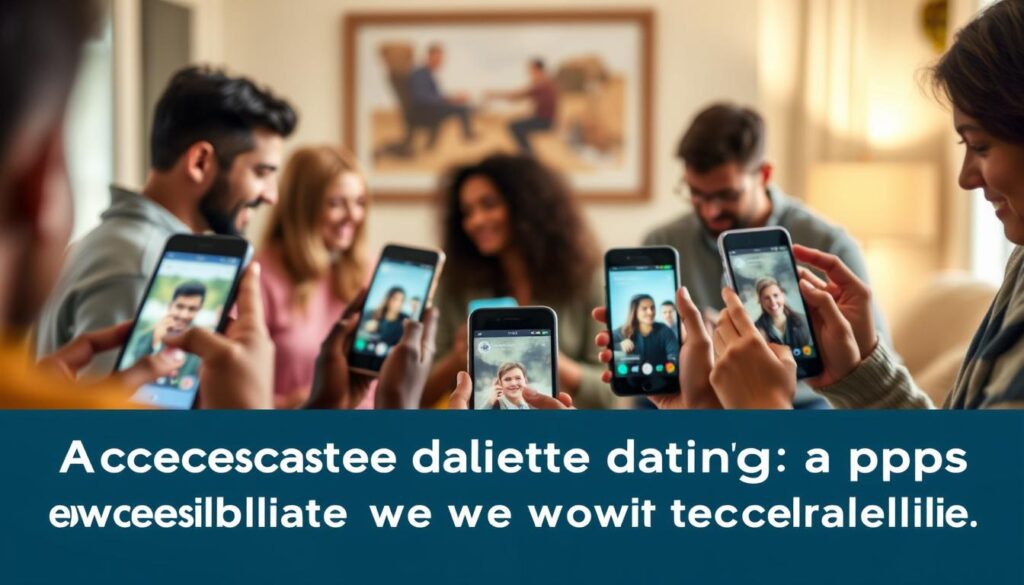
Accessible dating means core flows—onboarding, profile setup, discovery, messaging, and safety—are perceivable, operable, and understandable. It also includes supportive services and policies like clear harassment reporting, pronoun fields, and flexible verification.
- Practical examples: screen reader support, keyboard operability, high-contrast modes, resizable text, captioned video.
- Why it matters: better access leads to more social activities, improved mental health, and stronger life outcomes.
- Design ways: honor communication preferences (text-only, reduced motion, caption-first) to lower barriers.
Inclusive dating narrows tech adoption gaps that affect many americans disabilities groups. In short, accessible apps support autonomy, reduce isolation, and promote healthier social participation.
People with Disabilities: definitions, prevalence, and barriers in the United States
Understanding who counts under the americans disabilities act helps designers remove real barriers. The ADA defines a person as having a physical or mental impairment that limits major life activities, or as having a record of or being perceived to have such an impairment. This broad definition guides access obligations and inclusive product choices.
Americans Disabilities Act: who is covered
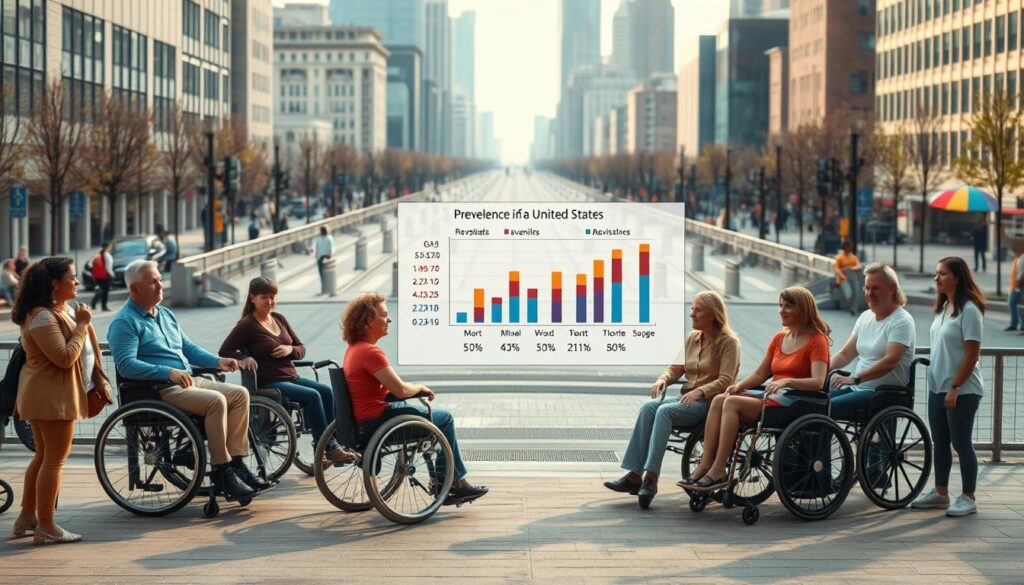
The americans disabilities act protects people across physical, sensory, intellectual, developmental, mental health, and chronic medical conditions. That protection includes those with a documented history or those seen as having an impairment. Designers and operators should treat this definition as a baseline for access.
How many are affected
About 42.5 million adults in the united states report a disability; globally, roughly 1.3 billion people have significant disability. Prevalence rises with age and varies by race and ethnicity, so dating apps must serve many life stages and communities.
Health, economic, and tech barriers
Health inequities—rooted in discrimination, limited services, and poverty—limit participation in relationships and social activities. Disabled Americans earn lower median incomes, which affects device ownership, data plans, and time online.
- Examples of common categories: mobility, sensory loss, cognitive conditions, mental health, and chronic illness.
- Technology gaps: lower smartphone and daily internet use mean apps should work offline and use low bandwidth.
- Design needs: larger targets, keyboard access, captions, and simple flows improve access for many users.
Translating web accessibility into dating app design and services
Start accessibility work by mapping core flows—signup, profile, discovery, and messaging—against WCAG goals. Use the Perceivable, Operable, Understandable, and Robust principles as engineering guardrails and align policies to the americans disabilities act so legal and product teams share the same targets.
Focus on semantic HTML and ARIA roles for reliable screen reader output. Proper heading order, lists for search results, and landmarks make navigation predictable for a person using assistive tech.
Provide captions, transcripts, and meaningful alt text so users with hearing or vision loss can access media and profile content. Offer text-only profile uploads and clear prompts that show example alt text and caption cues inside the UI.
- Maintain 4.5:1 contrast for normal text and allow 200% text resizing.
- Use clear fonts, large touch targets, full keyboard access, and focus indicators.
- Implement a global reduced motion setting and respect OS preferences to reduce vestibular triggers.
Design predictable navigation and error recovery so a person can complete tasks without repeated difficulty. Let users save preferences (high-contrast, captions-on, reduced animation) across devices and provide accessible support channels trained in assistive tools.
Test continuously with users who have varied needs, fix regressions fast, and publish an accessibility statement with a contact method and roadmap.
How to evaluate accessible dating apps and communities
Evaluating an app’s accessibility starts with hands-on checks. Test onboarding, profile editing, discovery, messaging, and reporting on an older phone and a slow connection. That reveals real usability when bandwidth is limited.
Feature checklist: access, support options, and real-life usability
Prioritize basics: screen reader and keyboard support, captions, alt text, high-contrast themes, large text, and reduced motion. Confirm these work across key activities, not just on a demo screen.
Assess support and accommodations. Look for relay-friendly phone help, accessible help center articles, and staff who know assistive tech. Check whether the app keeps lightweight modes for older devices and low data use.
Safety, moderation, and inclusive community standards for diverse groups
Safety tools must be immediate: in-chat reporting, block/mute, session controls, photo blur, and fast moderation. Transparent rules and example violations help users understand risks and consequences.
“A clear reporting flow and fast response time let a person regain control and feel safer online.”
| Check | Why it matters | What to test |
|---|---|---|
| Core access | Ensures basic use across devices | Screen reader, captions, contrast, keyboard |
| Safety tooling | Reduces harm and social risk | Report flow, block, photo blur, moderation speed |
| Privacy & data | Protects sensitive info | Location controls, staged disclosure, verification options |
Finally, seek signs of continuous improvement: an accessibility statement, changelog entries for fixes, and clear feedback channels. Those signals show the app treats access and health concerns as ongoing work.
Conclusion
Accessible dating platforms can reduce isolation and improve health for many adults seeking connection. Inclusive design that follows WCAG 2.1 and honors the americans disabilities framework supports better social and public health outcomes.
Invest in testing, clear defaults, and strong safety controls to make apps usable across devices and conditions. These steps help a person feel welcome from first use and build trust over time.
For designers, product leads, and services teams, accessibility should be part of roadmaps and QA. Users can judge platforms by published accessibility statements, quick fixes, and open feedback channels. When we design for access, we design better experiences for others and create a fairer digital life for all.