
Anúncios
Why do we keep swiping when a simple coffee date would do? This article unpacks the science behind how design choices guide people’s decisions, attention, and expectations about love and relationships.
Tech leaders have admitted the intent: Sean Parker said social platforms tapped a “social validation feedback loop” for dopamine hits. Jonathan Badeen compared the swipe to a slot machine that gives a quick rush.
Anúncios
Platforms once reported heavy use—Tinder cited about 90 minutes a day—and studies show many users swipe for confidence-boosting procrastination. A third of users even say they never go on dates.
As social media and apps shape connection, this piece previews the mechanisms at work: dopamine-driven feedback loops, variable-ratio rewards, and casino-like interface design that nudge continued clicks. We will weigh the promise of faster matches against real trade-offs in attention, trust, and mental health.
Anúncios
Why we can’t stop swiping: setting the stage for dating apps and behavior
By the mid-2010s, swiping had moved from novelty to routine for millions of people. That shift reshaped how we spend spare moments and how we expect to meet someone.
These dating apps removed old friction: approach anxiety, scheduling hassles, and geography. Instant discovery fits into daily life in small bursts, so brief checks add up without much planning.
Swiping compresses complex social rituals into repeatable micro-decisions. What starts as a quick thumb motion can scale into long sessions as users chase novelty and the promise of love from the couch.
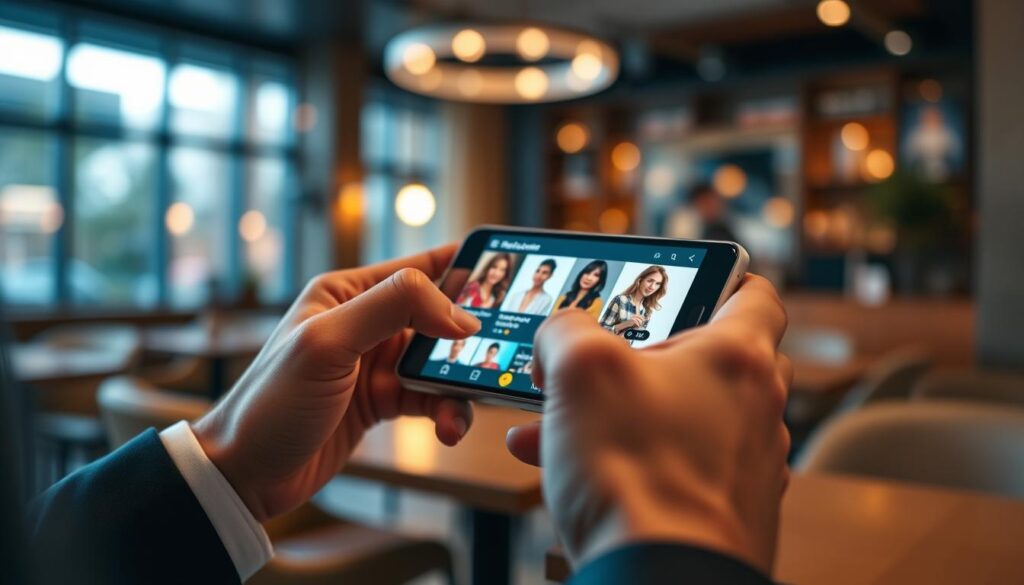
Compulsive checking also mirrors social media habits. Intermittent notifications and variable rewards nudge return behavior across platforms. By 2014–2016, average session times approached 90 minutes, and surveys found many people used an app for confidence-boosting procrastination rather than meeting offline.
| Metric | Mid-2010s Data | Behavioral effect |
|---|---|---|
| Average session | ~90 minutes/day | Long sessions form from bite-sized checks |
| Use motive | 44% confidence/procrastination | Validation replaces in-person effort |
| Offline meetings | >70% reported few meetups | Options feel plentiful; follow-through drops |
This ease creates a sense that a better match is always a swipe away. That feeling changes expectations and can lead to dependency-like patterns where brief checks stretch into hours. The paradox is clear: platforms promise more connection, yet the experience can fragment attention and turn dating into content consumption rather than relationship-building.
Next, we unpack why those quick actions trigger such sticky habits in the brain.
Gamified Dating App Psychology: how design taps the brain’s reward systems
A single tap can trigger a chain of expectation, reward, and repeated checking.
The basic mechanism is simple: anticipation often releases more dopamine than the actual outcome. That waiting period—swipe, pause, notification—creates a small spike that feels like a win before a match even appears.

Dopamine loops and the “little rush”
Sean Parker called this a “social validation feedback loop” that hands out dopamine hits. The little rush of a match conditions users to repeat the action.
Variable-ratio rewards and the slot machine model
Jonathan Badeen compared the swipe to a variable-ratio schedule similar to Skinner’s experiments and slot machine mechanics. Unpredictable rewards keep people checking more often.
Expectation, anticipation, and habit formation
The system turns social signals into a game where progress is measured in matches and streaks. Many users chase that micro-reward even if they rarely meet offline—surveys show over 70% reported few in-person meetups and 44% used apps for confidence or procrastination.
“The swipe gives a nice little rush.”
- Anticipation fuels dopamine spikes.
- Variable rewards create persistent checking.
- Design cues—animations, sounds—amplify the pull.
The mechanics that keep users coming back: swipes, profiles, and algorithms
What feels like a simple swipe is actually a crafted loop that invites another turn.
Design choices on modern platforms are tuned to reward quick actions. The interface turns browsing into a repeatable ritual. That ritual can stretch a brief check into a long session without much notice.
Swipe UX as a casino-inspired interface
Card stacks, haptic nudges, and surprise matches mirror slot-machine unpredictability. Each reveal is variable and intermittent, which trains people to return for the next outcome.
Engagement over compatibility: the algorithm illusion of “perfect matches”
Many dating apps tune their model to surface profiles that spark activity rather than long-term relationships. Match percentages or badges create an aura of science, even when the signals are chosen to boost clicks.
Reducing a person to tiles encourages snap judgments and flattens nuance. Slight dopamine boosts from intermittent matches reinforce short sessions that grow into routine checks.
- Card reveals and streaks reward repeat behavior and spending.
- “95% match” visuals nudge continued chatting, not necessarily better fit.
- Business models prioritize time spent on apps over off-app success.
To counter the pull, slow your swipe, read a profile, and treat each profile as a person—not a random card. Small habits like that can disrupt the machine and bring actions closer to real-world intent.
Behavior on the platforms: gender patterns, time spent, and match dynamics
Use patterns on these platforms create feedback loops that steer how people act and how long they stay.
Men’s “casual liking strategy” vs. women’s selectivity
Research finds many men like broadly, hoping volume yields matches. Many women filter more strictly and swipe less.
That asymmetry creates uneven match dynamics. Men often get fewer matches per like, which pushes some to like even more.
Uneven match rates and reinforcement cycles
Lower match rates for men can reinforce liberal liking. Higher match rates for women let them tighten criteria.
These loops shape messaging norms and expectations about response speed and tone. Users report feeling uncertain when replies are inconsistent.
Minutes turn to hours: how daily swiping habits form
One survey found men averaged ~85 minutes per day and women ~79 minutes. Small checks add up fast.
As swiping becomes downtime, it shifts from intentional dating to background scrolling. That can feed addiction and anxiety for some users.
| Group | Typical strategy | Common outcome |
|---|---|---|
| Men | Broad liking, high volume | Lower match rate → more liberal likes |
| Women | Selective filtering | Higher match rate → stricter criteria |
| Result | Asymmetric reinforcement | Shifts in messaging, self-presentation, and churn |
Try a deliberate, slower approach: quality over quantity can break the loop.
“I report feeling overwhelmed when replies are random or delayed.”
Mental health and social fallout: loneliness, anxiety, and the cost of gamification
Endless choice can feel like freedom, but it often creates a quieter ache of isolation.
When options multiply, commitment gets harder. The paradox of choice means more profiles can raise uncertainty and dissatisfaction. Many people report feeling overwhelmed rather than liberated.
A 2018 U.S. survey of 20,000 adults found rising loneliness, especially among Gen Z and millennials. Loneliness links to higher risks of coronary heart disease and stroke, according to Julianne Holt-Lunstad.
Ghosting, trust, and filtered realities
Ghosting becomes normalized when a next swipe is always nearby. Sudden disappearances leave lingering anxiety and self-doubt for the person who is left without closure.
Minimal verification and heavy filtering allow catfishing to persist. That erosion of trust nudges defensive behavior and lowers faith in genuine connection.
Screen time, dopamine, and real-world costs
Variable dopamine highs and lows can fuel compulsive checking and mood swings. Many users report feeling worse after sessions, not better.
- More in-app time can displace in-person connection and hamper relationship building.
- Loneliness and anxiety carry measurable health costs.
- Protective practices—clearer boundaries, verification tools, and moving conversations offline—help rebuild trust.
“People often report feeling more anxious after long sessions, highlighting the gap between promise and reality.”
The business of love-as-a-game: monetization, streaks, boosts, and rewards
Platforms have turned visibility into a paid commodity, reshaping how people find one another.
Many platforms sell boosts and “super likes” that raise a profile’s chance of being seen. Those features convert attention into revenue. They effectively put a price on discovery and on match odds.
Streaks and daily rewards borrow from game mechanics. Small wins for logging in create habits that keep users coming back. Counters, badges, and priority queues signal progress and nudge more spending.
This design supports an engagement-first system. The business model profits when people stay and scroll. That can conflict with helping people reach quick off-platform relationship outcomes.
“Incentives that lock attention can turn intimacy-seeking into a marketplace.”
- Boosts/super likes monetize visibility and shift discovery into paid features.
- Streaks reward consistency and drive habitual logins.
- Badges and counters encourage micro-spending without guaranteeing a real match.
The comparison to retail rewards is telling: prepaid incentives, like coffee loyalty programs, secure repeat dollars. In the same way, gamification turns routine actions into predictable revenue.
To protect yourself: set a clear budget, track how many quality matches you get per dollar, and favor purchases that help conversations move offline. These small rules reduce pressure and lower the harm of addictive loops.
Designing healthier connections: moving beyond swipe culture
Building platforms that encourage lasting ties starts with small design choices.
Identity verification and clear codes of conduct reduce deception and raise trust. Layered checks—photo validation, ID checks, and community reporting—cut down on risky behavior and ease emotional strain.
Profiles beyond looks
Profiles should foreground values, prompts, and lifestyle details. Prompts that ask about priorities or routines shift attention from photos to compatibility.
Community-centered models
Local events, group introductions, and mutual accountability create social norms that reward respect. These mechanics nudge people to follow through and meet offline.
- Identity verification and layered screening for trust and safety.
- Prompts and longer profiles to highlight relationship readiness.
- Community events and accountability to support connection.
| Feature | What it does | Benefit |
|---|---|---|
| Layered verification | Photo checks + ID options | Reduces catfishing; builds trust |
| Values-first profiles | Prompts and lifestyle fields | Improves match relevance |
| Community events | Local meetups and groups | Encourages real-world follow-through |
“Designed to be deleted” means success is measured by real relationships, not time spent.
Small UX shifts help too: limit daily swipes, prompt scheduling a call, and reward thoughtful messages. These changes work psychologically by slowing decisions and reducing bias. On the individual level, verify profiles, set clear intentions, and take breaks to protect mental health and focus on meaningful connection.
Conclusion
What began as a shortcut to meet someone now often rewards novelty over lasting connection. This article shows how swipe loops and slot-style unpredictability nudge users to come back, chasing quick rewards and dopamine hits more than meaningful matches.
People spend minutes and time scrolling, and many never meet in person. Men face uneven match rates that shape behaviors and expectations. That imbalance matters for how users feel and act.
The human cost is real: fatigue, anxiety, and effects on health and relationships. Treat each profile as a person, not a card. Favor features and habits that move conversations off the app—calls, dates, and community events—to turn digital signals into real connection.
Demand transparency, verification, and products designed to be deleted. Small design choices and personal discipline can realign the game with life and genuine love.