Anúncios
Can a swipe, a shared movie night, and a few learned phrases bridge traditions and family pressure across oceans?
Anúncios
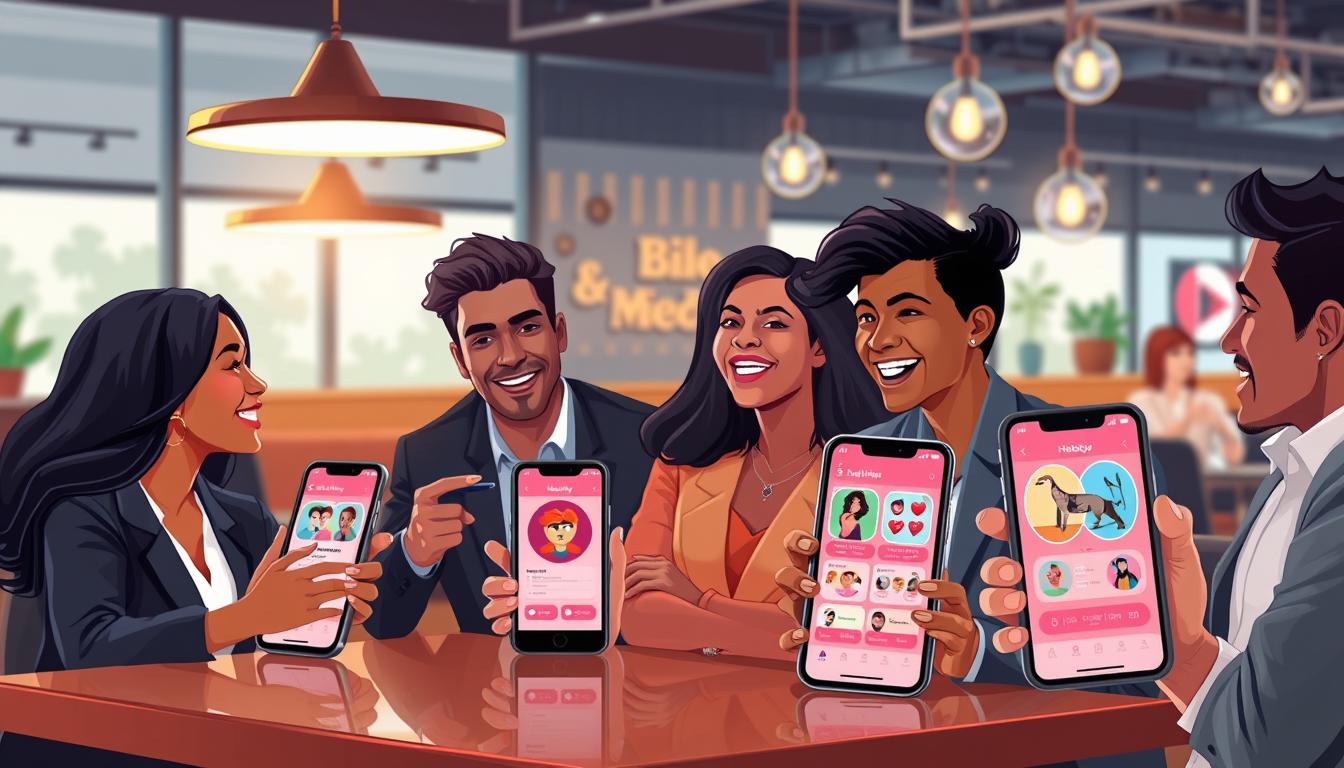
In the united states, meeting someone from another country often starts on an app. A pair who met as transfer students shows how easy that start can be and how complex the path becomes. They learned Malayalam terms, watched a subtitled film, and talked about Meet the Patels to map family expectations.
Success here depends on clear conversation, shared values, and respect for different norms. Race and family views can shape how people act early on. Planning for distance and honest talk about time, goals, and commitments helps avoid hurt later.
Anúncios
This short guide is practical. It centers love and real relationships that move from online to real life. Expect research, real stories, and simple ways to learn about a partner beyond one single story.
Why Cross-Cultural Dating matters today in the United States
Today, more people meet partners from different countries in the same coffee shop, classroom, or app than ever before in the united states.
American culture often treats dating as casual at first. People meet via apps, split the bill, and delay labels until they know each other. That can surprise someone from a country where courtship moves toward marriage quickly and family plays an early role.
Global work and study, plus easy travel, explain why these matches are rising. The world feels smaller, and people use the same platforms to meet. That means different timelines and norms can collide fast.
Small questions carry big signals: asking “When will I meet your parents?” can mean very different things depending on background. Misreading race or family patterns from one story adds friction.

| Feature | Common U.S. Norm | Contrast in Marriage-Focused Places |
|---|---|---|
| Early family input | Minimal | High, parents often involved |
| Exclusivity timing | After several dates | Expected early, signals seriousness |
| Public affection | Accepted | Often limited by custom |
| Pace toward marriage | Varies widely | Often quicker, family-guided |
Practical stakes are high. Differences in pace, PDA, and long-term plans shape relationships and life choices. Respecting cultural context, naming expectations early, and aligning on shared values help relationships thrive.
Cross-Cultural Dating: Principles for building meaningful relationships
Building real bonds across backgrounds starts with small acts of learning. These habits turn curiosity into steady practice and help two people move from polite dates to honest partnership.
Be the student
Ask a sincere question, try a new dish, or learn a simple greeting in your partner’s language. Tasting each other’s food or watching a Malayalam film with subtitles can open a gentle, respectful conversation.
Don’t reduce someone to a single story
Invite the person to name which traditions they keep and which they skip. Chimamanda Ngozi Adichie’s warning helps: replace stereotypes with real stories about background and choice.
Talk about pace and expectations
- Make differences in exclusivity, PDA, and long-distance explicit.
- Document weekly check-ins, agreed PDA levels, and date rhythms that work.
- Practice humility when one partner knows Western dating better than the other knows Malayalam.

| Principle | Action | Outcome |
|---|---|---|
| Be the student | Ask one question, try a dish, learn a phrase | Builds trust and helps get know a partner |
| Avoid single stories | Invite personal choices; watch subtitled media | Reveals real values and reduces assumptions |
| Explicit expectations | Agree on pace, exclusivity, PDA, check-ins | Prevents misread signals and hurt |
Communication across languages and cultures: Make conversation work
When words fall short, a shared film or a learned phrase can build a bridge between people. Simple tools turn confusion into something you can enjoy together.
Bridging language gaps
Use basic phrases in each other’s language, subtitles, and films to get know one another through shared experiences. One dater who struggled with Arabic phone talks found that watching movies with subtitles created common ground and felt less isolating.
Read nonverbal cues
Some cultures favor subtle gestures over direct words. In Japan, public displays are often avoided and group first meets (goukon) are common.
“Japanese dating often values subtle, nonverbal communication,” — Dr. Ana Maloyan-Kishida.
From icebreakers to deep talks
Ask questions that invite stories, not stereotypes. For example, “What holiday dish means the most in your family and why?” opens memory and feeling.
- Agree on simple phrases and a small glossary for terms like exclusivity or meeting family.
- Summarize during a date: “I hear family dinners matter to you” to confirm meaning.
- Mix text and short video check-ins to tune into tone and feelings between dates.
Navigating family, traditions, and expectations
Family expectations often enter a relationship long before two people agree on what serious means.
Meeting the parents: Respect, curiosity, and etiquette
Treat meeting the parents as a cultural rite. Ask about greetings, gifts, and titles ahead of time.
Arrive on schedule, listen more than you speak, and show curiosity about traditions and background. Little acts of respect can open doors.
Timelines: exploratory dates versus marriage-first paths
In the United States, many people treat dating as exploratory. In India, families may steer matches toward marriage quickly. In China, parents sometimes push frequent contact and marriage-focused choices.
Talk early about what marriage or commitment means to each partner so dates and milestones align.
Handling friction with grace
Prepare for tough questions with empathy. Explain your intentions, share joint experiences, and affirm your partner’s values.
Address race dynamics openly if they arise and plan responses together. For long distance, set visit schedules, celebrate small moments remotely, and lean on a trusted friend for perspective.
“Strong family networks can be a gift, even when they bring a lot of opinions.”
Decide together what makes the relationship serious—meeting parents, exchanging keys, or shared plans—and check in after family visits about feelings and next steps.
Country-by-country contrasts to set expectations
What feels normal on a first date in one country can feel strange in another. Below are short, practical notes to set expectations before you meet someone from a new place.
United States and UK
First dates often happen at a bar or café. People split the bill or go dutch. Talks about exclusivity usually come after a few dates.
India, China, and Japan
In India many relationships move with parents and a marriage focus; a man may take a provider role. In China, parental pressure and marriage markets push couples faster, with early calls and texts common. In Japan, group meetings (goukon) are frequent and kokuhaku—a confession—marks commitment.
Brazil, France, and Eastern Europe
Brazil moves fast, with open PDA and lively flirting; men often insist on paying. In France, “seeing someone” can mean serious love without a formal DTR. Across Eastern Europe, traditional roles remain: men bring flowers, women stress loyalty, and marriage holds strong value.
“Know the local rules before you pick the place and tone for a first meet.”
| Region | Typical first meeting | Family/pace | Cultural cue |
|---|---|---|---|
| US / UK | Bar or café | Low parent input; gradual pace | Going dutch; public affection accepted |
| India / China / Japan | Family introductions / group meets | High parent input; marriage-focused | Early texting, kokuhaku, arranged options |
| Brazil / France / Eastern Europe | Parks, cafés, lively nights | Varies; romance and tradition mix | PDA in Brazil; subtle French romance; chivalry in East Europe |
Use these contrasts to pick the right place and tone for dates. Every person and couple is unique within each country, so ask and listen before you act.
Safety, boundaries, and long-distance logistics for app-based dating
Meeting someone online is exciting, but simple safety rules keep that excitement healthy. Start with quick verification and clear plans so you protect time, trust, and dignity.
Be safe online and offline
Begin with a video call to confirm the person is who they say they are. Then plan the first date in a public place and arrive separately so you control your exit and time.
Set firm boundaries early
Never send money, gift cards, or financial details for any reason. Scammers use distance and language gaps to create urgency and false sympathy.
- Agree on communication cadence and privacy limits with your partner.
- Watch for control tactics—jealousy, monitoring, or pressure to isolate—and end contact if manipulation appears.
- Share itineraries with a trusted friend before a meetup and use app safety features and rideshare tracking.
- Create a simple checklist: video-first, public meetups, no money, trust your gut.
For long-distance logistics, schedule calls that respect time zones, plan visits within budget, and treat both woman and man with equal respect. Culture or family pressure is never a reason for control or abuse.
Conclusion
Healthy relationships across borders grow from curiosity, clear talk, and steady respect. When two people choose to learn one another’s ways, love finds room to grow.
Focus on shared values, safety, and concrete plans for meeting family and defining milestones. This approach helps keep feelings respected and reduces confusion about marriage or commitment.
Even if a story reaches an end, the years spent together teach listening, empathy, and a lot about life. Those skills help each person beyond romance and into work, friendship, and family ties.
Try this way: write down boundaries, name what you want in marriage, and plan staged family introductions. Carry gratitude into every chapter and stay curious and careful on your next dating conversation.